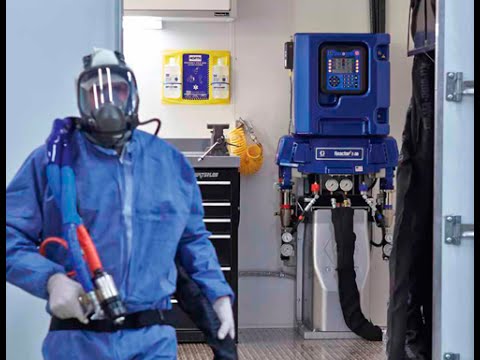
Safety correction, October 31, 2026: This article previously gave generalized flushing, lubrication, cleaning and service-interval instructions without identifying the equipment or materials. Those instructions have been withdrawn. Use the current manuals for the exact system and written material-supplier guidance; do not use an older copy of this article as a maintenance procedure.
A plural-component spray system is an assembly of equipment and materials, not a single interchangeable machine. A useful maintenance plan identifies the installed components, the products being handled, the responsible personnel and the documents that govern each task. The purpose of this guide is to organize that plan, not to tell an operator how to open, flush or repair equipment.
Identify the equipment before choosing a procedure
Record the manufacturer, model, serial number and installed configuration of the proportioner, gun, transfer equipment, hoses, heaters, air supply and power source. Keep the applicable operation and service manuals together. A photograph of a similar rig is not enough to establish that a procedure or replacement part applies.
Ask the equipment provider which tasks a trained operator may perform and which require qualified service personnel. Do not improvise electrical checks, pressure-relief steps, disassembly or restart procedures from a general checklist. Resolve missing or conflicting instructions before the work proceeds.
Confirm material identity and compatibility
The Graco HFR setup-operation manual explains that moisture and component cross-contamination can damage equipment and create hazards, and that material suppliers may use different component naming conventions. It also directs users to verify chemical compatibility with the material manufacturer. This is an example of why a side label alone is not a sufficient basis for selecting a maintenance fluid; the cited manual is not a universal procedure for every spray system.
For the actual installation, obtain the approved procedure for material changes, shutdown, storage and return to service. Confirm the required products, parts and qualifications with the equipment and material suppliers. Do not substitute a cleaning agent, lubricant or replacement seal based only on availability or a generic internet recommendation.
Build the schedule from applicable documents
Create a record with the component, required task, controlling manual and revision, trigger or interval, responsible person and completion evidence. Distinguish calendar-based tasks from operating-hour or condition-based tasks. Do not copy one machine's schedule into another system without confirming its applicability.
Keep observations and corrective actions together. A recurring fault deserves investigation rather than repeated resets or an assumed adjustment. Record who authorized a repair, which parts were used and what verification was required before the equipment returned to operation.
Keep exposure controls in the maintenance plan
Maintenance can involve residual chemicals as well as equipment hazards. OSHA's isocyanate guidance identifies respiratory and skin hazards relevant to some coating materials. The employer and qualified safety personnel should establish the applicable exposure controls and safe-work procedures for the actual task. A low-VOC claim is not a substitute for that assessment.
Make support arrangements before a failure
Keep the equipment supplier's service contact, required documentation and approved spare-parts information accessible. When requesting help, provide the exact model, material identification and observed fault, without attempting an unapproved repair to keep the job moving. Our supplier-selection checklist includes questions about technical support and parts availability.
A useful maintenance record shows what was checked, which instructions applied and who released the equipment for use. It does not promise failure-free operation or replace the manufacturer's procedures. The original article URL and publication date are retained for continuity; the safety correction above describes the revision.


0 Comments